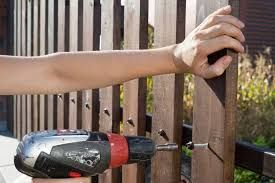
If your fence is leaning, missing boards, or looking sunbaked and tired, you’re probably asking the same question most Thousand Oaks homeowners ask: Should I repair this fence, or is it time to replace it?
Here’s the fast answer:
- Repair makes sense when the structure is mostly sound and damage is limited to boards, rails, pickets, hardware, or one or two posts.
- Replacement makes sense when posts are failing repeatedly, rot is widespread, the fence is warped beyond alignment, or you’re spending money every season just to keep it standing.
This guide will help you decide confidently—especially for homes in Thousand Oaks, Newbury Park, Oak Park, Westlake Village, and Agoura Hills where heat, sun exposure, and dry soil can accelerate wear.
Why Fences Wear Out Faster in Thousand Oaks
Local conditions matter. In the Conejo Valley, fences often fail due to:
- Sun/UV damage drying out wood and fading stain
- Dry soil shifts loosening posts over time
- Sprinkler overspray causing rot at the base of boards and posts
- Wind exposure in open areas that flex gates and weaken hinges
- Aging construction (especially older redwood and pine sections)
A fence can look “fine” from a distance but be structurally compromised at the posts—where it matters most.
Fence Repair: When It’s the Best Option
Fence repair is usually the right move when:
The posts are stable
If posts are plumb and firm, many repairs are cost-effective:
- Replacing a few pickets
- Refastening rails
- Fixing a sagging gate
- Replacing a latch or hinge
- Swapping a damaged section
The damage is limited to a small area
Examples:
- A few boards cracked from dryness
- One section leaning after wind
- A gate that drags or won’t latch
You want to extend life without changing the design
Repairs can buy you several more years if you:
- Replace failing boards
- Re-secure rails
- Add bracing
- Re-stain or paint
Fence Replacement: When It’s Time to Start Fresh
Replacement is usually smarter if:
Rot or termite damage is widespread
If multiple sections have soft wood, crumbling post bases, or repeated failures, repairs become “patchwork.”
Posts are failing repeatedly
Posts are the backbone. If posts are leaning, cracked, or loose in the ground, you’ll keep paying for resets and re-bracing.
The fence is warped and misaligned
When rails bow and sections twist, it’s hard to restore straight lines. You may repair one portion and have another fail next month.
You want a new look, height, or layout
If you’re changing:
- fence height
- style (horizontal, board-on-board, lattice top)
- property line layout
- or adding a new gate
…replacement is the cleanest route.
Cost Comparison: Repair vs. Replacement
Fence repair pricing often depends on the material, length, and complexity. Many cost references estimate fence repair around
$20–$30 per linear foot on average, with wide variation based on damage type and fencing material.
Fence replacement is typically quoted as an install cost per linear foot and varies heavily by material, height, and design.
What matters most isn’t the exact “per foot” number—it’s this decision:
Use this rule of thumb:
If repair costs are approaching
30–50% of replacement, it’s usually smarter to replace—especially if the fence is already near end-of-life.
A Practical Inspection Checklist (Homeowner-Friendly)
Walk your fence line and check:
1) Post stability
- Push lightly at the post.
- If it moves at the base, the footing may be compromised.
2) Wood condition at the bottom
- Look for dark staining, softness, or crumbling.
- Rot often starts where sprinklers hit.
3) Rails (horizontal supports)
- Are they splitting, sagging, or pulling away from posts?
4) Fasteners and hardware
- Rusted nails and screws loosen faster.
- Gate hinges sag when fasteners strip out.
5) Alignment
- A fence that’s “wavy” is often a sign of multiple failing posts.
If you spot multiple issues on more than one section, replacement may be the more economical long-term option.
The #1 Fence Problem in Thousand Oaks: The Gate
Even when the fence panels are okay, gates take daily stress:
- opening/closing force
- latch slams
- gravity pulling hinges down
- soil shift throwing alignment off
If your gate is sagging or dragging, repair is often possible without replacing the entire fence—especially if the posts can be reinforced or reset.
Repair Options That Actually Hold Up
A “good” repair isn’t just swapping boards. It usually includes:
- Replacing rotten boards and rails
- Using exterior-rated fasteners
- Adding bracing to gates
- Resetting or reinforcing posts
- Staining/sealing repaired areas to reduce future rot
The goal is to restore structural integrity, not just make it look better for a month.
Repair vs Replacement Scenarios (Realistic Examples)
Scenario A: Leaning section, solid posts elsewhere
Best choice: Repair
Likely needs: post reset for one area, re-secure rails, replace a few boards.
Scenario B: Multiple posts leaning, wavy fence line
Best choice: Replacement
You’re likely dealing with widespread footing issues.
Scenario C: Fence panels okay but gate won’t latch
Best choice: Repair
A gate bracing + hinge reset usually solves it.
Scenario D: You’re updating curb appeal before selling
Best choice: Depends
If the fence is a visual eyesore from the street, replacement may return value faster (especially with fresh stain and clean lines).
FAQs: Fence Repair & Replacement in Thousand Oaks
How long should a wood fence last in Thousand Oaks?
With sealing/staining and basic maintenance, many wood fences last
10–20 years, depending on material and exposure. Direct sun and sprinkler contact can shorten lifespan.
Can you replace just one section of a fence?
Yes. Section rebuilds are common and often the most cost-effective solution when damage is localized.
Do I need to stain or paint after a repair?
It’s highly recommended. Sealing repaired wood helps protect the new materials and prevents mismatched weathering.
What causes fence posts to lean?
Common causes include soil movement, shallow/failed footings, rot at the base, and repeated wind stress.
Is gate repair usually cheaper than replacing the whole fence?
Yes. Many gate issues are hinge/post alignment problems that can be repaired without full replacement.
Call to Action: Get a Straight Answer From a Local Pro
If you’re unsure whether your fence needs repair or replacement, the fastest way to decide is a quick inspection from someone who works locally and understands Thousand Oaks conditions.